Enterprise systems integration
Enterprise systems integration is operating the fabric: identity, data, events, and processes with semantic ownership and SLAs — not a one-off cable. EmerSoftware treats integration as a factory product.
EmerSoftware solution
Enterprise system integration with SAP, Oracle, Salesforce, AWS, Azure, and legacy — contracts, events, identity, and EmerAgents to operate the enterprise fabric.
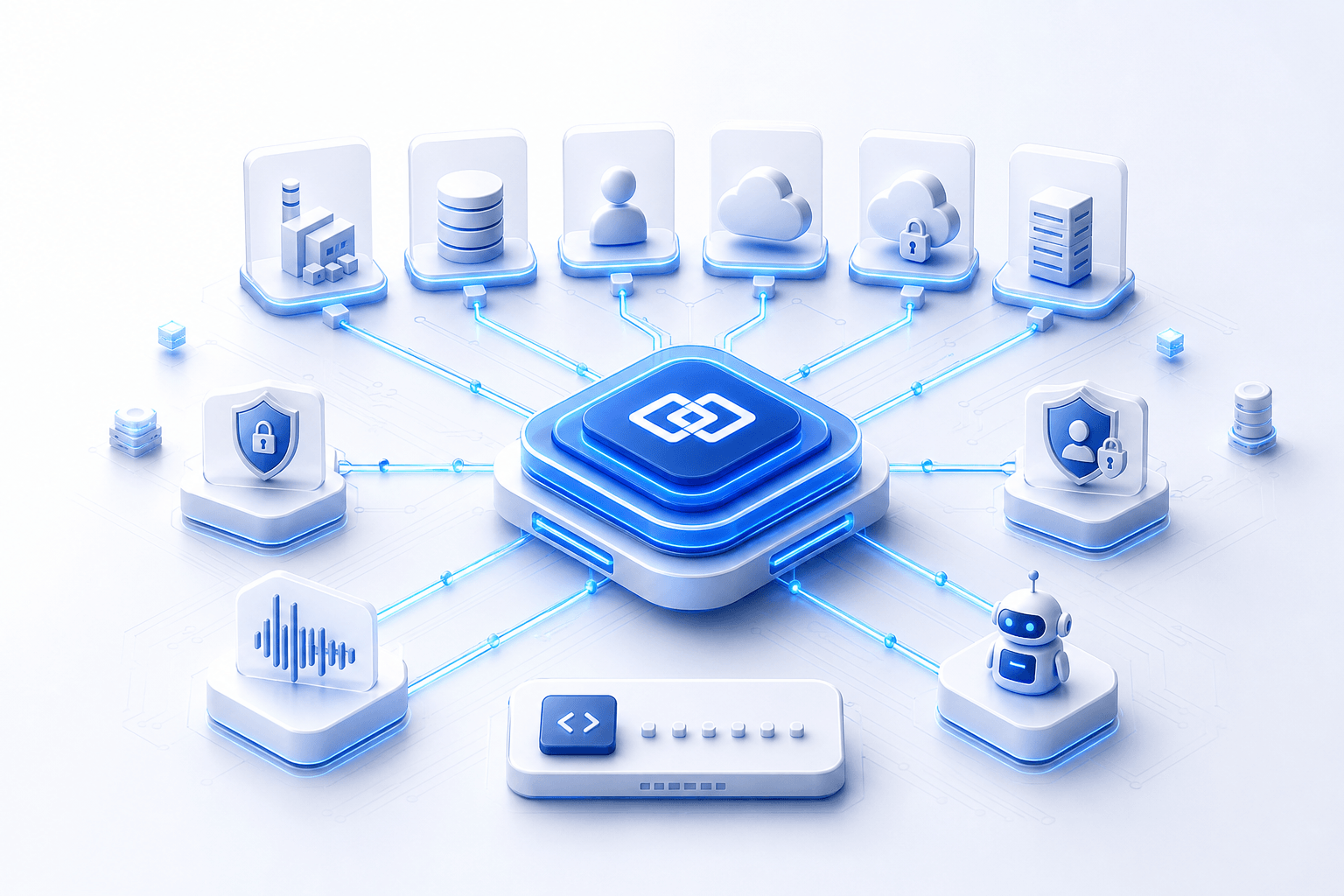
Enterprise integration is not “connecting APIs.” It is operating a fabric: identity, data, events, and processes with semantic ownership (owners, contracts, and data meaning) and SLAs. EmerSoft treats integration as a factory product — with EmerAgents orchestrating handoffs and exceptions.
Illustrative integration scenario — not a named-client KPI
Contract
before connector
Idempotent
writes
SLA
per flow
Fabric pattern for SAP/Salesforce/AWS. Agents orchestrate handoffs after the boundary is contracted.
Map identity, data, and one cross-system exception flow. Contract the boundary before any agent write tool.
Enterprise systems integration is operating the fabric: identity, data, events, and processes with semantic ownership and SLAs — not a one-off cable. EmerSoftware treats integration as a factory product.
Enterprise data integration names the owner, the contract, the operational meaning, and consistency. Without that, the next flow becomes a spreadsheet and an AI agent cannot write safely.
Legacy integration via API uses a facade and anti-corruption layer: the old core stays, the new edge speaks a versioned contract. Idempotency and rollback are mandatory before go-live.
Reusable connectors and patterns reduce the cost of the next flow.
API and messaging contracts that survive the sprint and the audit.
Latency, failures, and consistency visible end to end.
How we operate
SAP, Oracle, and Salesforce mapped to real processes — not the idealized org chart.
AWS, Azure, Google Cloud, and pipelines with access and cost governance.
Facades, anti-corruption layers, and controlled exposure — with explicit semantic ownership of each entity.
Integration and Operations agents handle exceptions, watch SLAs, and close the loop.
Method
Systems, data owners, identity, and the real events of the operation.
API, messaging, idempotency, and SLA per flow.
Factory connectors plus EmerAgents with explicit roles.
A trail of intent, context, decision, and metric on every relevant action.
FAQ
Only when it makes sense. Often we orchestrate on top of what already exists and stabilize contracts — no rip-and-replace.
Yes. SAP and cloud enter the same design for boundaries, identity, and observability.
It means defining who owns each data entity, which contract (API/event) applies, what the operational meaning is, and which SLA binds it. Without semantic ownership, integration becomes an opaque point-to-point cable — and AI agents cannot safely write into the fabric.
No contract and SLA, no go-live. Idempotency, ownership, and contract tests are mandatory.
30: map the fabric and bottlenecks. 60: contracts and first EmerAgents flow. 90: industrialization with SLAs.